

Amateur radio isn’t the easiest hobby for young people to pursue for a multitude of reasons, including the support needed to get one’s footing in the hobby. One of the most challenging factors for youth wishing to get involved with amateur radio is the financial investment. However, this challenge can definitely be overcome.
If you are a young ham struggling to get into amateur radio because of the expenses or simply want to explore more of the hobby before making a large financial commitment, there are plenty of low- or no-cost options to help you get started.
The first—and lowest-cost option—is to borrow equipment. This could be from a mentor, another local ham, or perhaps even a club. Many clubs have a few pieces of equipment that can be borrowed by their members (particularly younger ones), and some even have fully assembled stations to lend.
For example, my school club started with an older HF radio as the set club station. After receiving a donation of another radio, we decided that rather than have two radios in the permanent station setup, it would be more worthwhile to use one of the radios as part of a station to lend to students who have just gotten their General or Extra licenses. To complete this “lender station,” we purchased an inexpensive power supply and a simple dipole at a hamfest so club members wouldn’t need too much of their own equipment in the setup.
My school’s club also has a few VHF and UHF radios to be lent to students, along with corresponding antennas. Students who pass their Technician exams are given a handheld transceiver upon receiving their callsigns, so the VHF and UHF setups are not as frequently borrowed as the HF station. Students typically borrow this equipment over holiday breaks during the school year and summer break since we have a permanent station at the school that is open for them to use.
Another way to save money on equipment is to “borrow” it remotely. Some local clubs have remote-capable stations that you could use, and if not (or in addition to that!), Remote Ham Radio (RHR) has a free membership for young hams, allowing you to use their select youth stations which are graciously put on the air by other users of the software. All you need to use the RHR youth console is a device that has a supporting browser and a good internet connection, making RHR a very accessible option.
Editor’s Note: Click here for details on the available Youth Network RHR stations, all using FlexRadio transceivers designed for remote operation.
EchoLink is another online way to get on the air. Although it is only for VHF and UHF, you can still check into nets and use repeaters that have been set up to work with EchoLink.
If you’re looking to start your own station rather than borrowing or using online equipment, there are a few good lower-cost options both for buying new and previously owned equipment. As I noted when discussing my school’s equipment for loan, we purchased a few pieces of equipment at local hamfests. These hamfests can be a good place to purchase previously owned equipment for significant discounts, though they can be rather “hit or miss,” so it may take some effort to find exactly what you need.
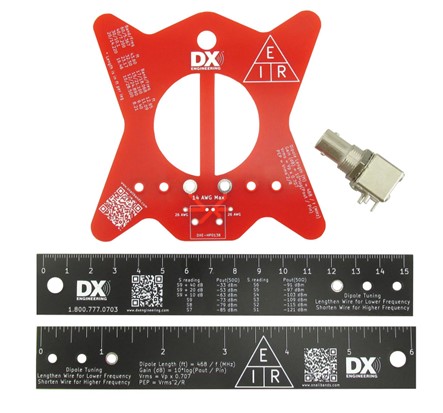
While not as low-cost as the options I’ve mentioned, buying and building kits is also a significantly less expensive possibility than simply buying a radio. Lots of kits exist for small HF radios, particularly for CW, and you can quickly and inexpensively build a CW key with household materials. Antennas can also be easily “homebrewed” (built yourself) from materials that you probably already have around your house, like speaker wire and lamp cord. A large part of amateur radio is the spirit of building and designing your own equipment. Getting creative is not only a good way to save some money, but it can also lead you to the sub-community of amateur radio operators who love experimenting with the technical side of the hobby.
There are numerous ways to get involved with amateur radio on a budget, from borrowing equipment to building it. More importantly than where the equipment comes from, have fun getting on the air!

