

For years I was in search of the “perfect antenna.” I wanted one antenna so I could work the most remote DX as well as nearby county nets. Knowing the theory and all, I knew how foolish this was, but every time a “new antenna on the block” came along, I was convinced this was it. And every time I was compromising somewhere, and it did not live up to the hopes of my heart.
Before I go further, understand that this is the journey I took and the conclusions I arrived at. I am not here to tell you how you need to do things, but rather to share my experiences to hopefully save you some heartache and money. Always remember, mileage may vary.
I am a simplistic person and like to keep things simple. When I first earned my General ticket, I was only interested in EMcomm, so an NVIS (Near Vertical Incidence Skywave) antenna made good sense—a simple wire antenna running horizontally at about 20 feet from the ground. I could get into any net in Ohio and relay regional traffic like nobody’s business. I thought I was set for life…or was I?
Then one night I decided to spin the dial. I started hearing stations from Canada, Central America, and even Europe as I explored the bands. I never thought I would enjoy DX. After all, I got into the radio thing out of a sense of duty to my community. After listening for a few weeks, I thought I would start trying to reach out to those stations calling CQ.
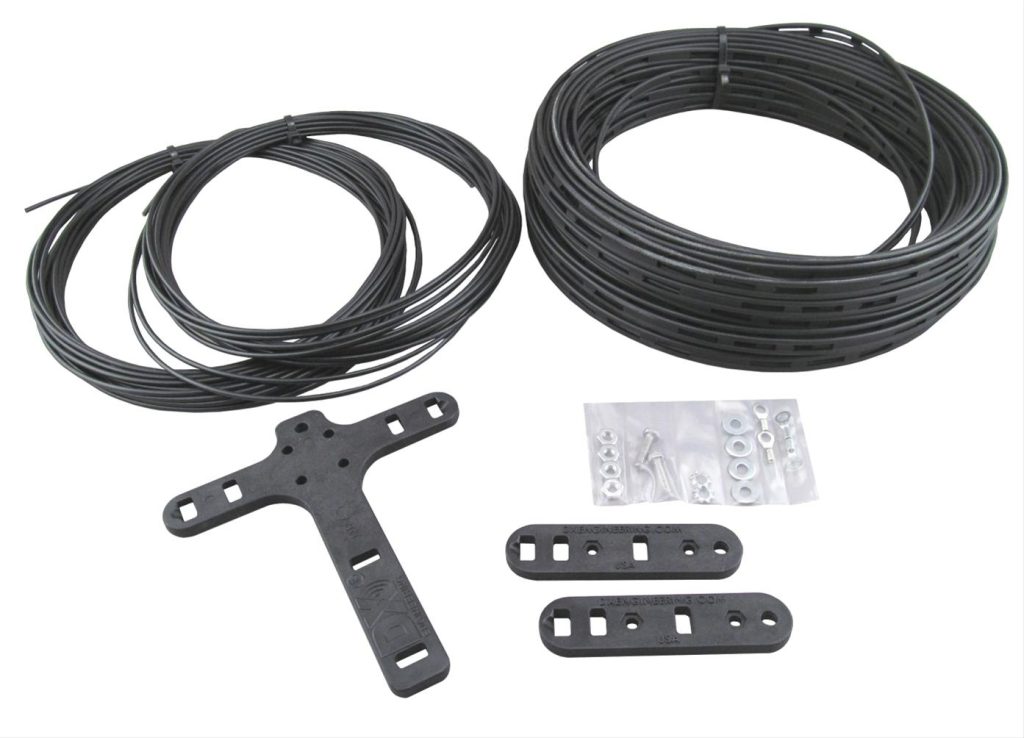
Using my simple 60-foot end-fed wire antenna, I was actually able to have a solid QSO with these DX stations. Some of them did not hear me, but a lot of them did. So, my quest was on—to find the end-fed antenna that would allow me to maintain both NVIS and DX radiation. Sounds logical, right?
I spent years and way too much money trying to get just the right antenna. I tried flat-tops, slopers, inverted-vees, and dipoles of various configurations. Some performed better than others. It was both a fun and frustrating endeavor.
I found that if I had an antenna, I was able to optimize for DX, it would perform well for that use but would suffer in the NVIS area. And if I tweaked it for NVIS, it suffered in DX radiation. In the end, I concluded that as much as I loved working with wire antennas, they had their limitations.
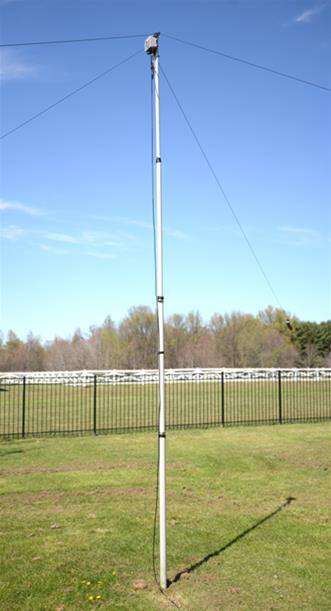
As I looked at broadening my antenna horizons, I explored tower/beam combos, mast-mounted verticals, and ground-mounted verticals. I decided on a ground-mounted vertical, specifically the DX Commander Signature 18 Nebula. I have already written two articles on that antenna and the installation, so I will not go into that here.
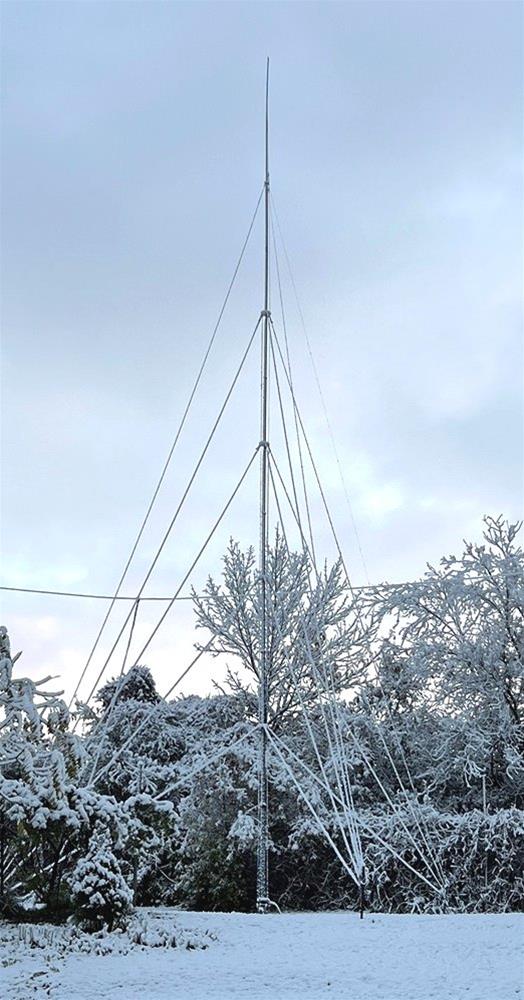
So now that I had this amazing nearly 60-foot ground-mounted vertical antenna, I was very anxious to get back on the air. I fired up the ole Yaesu and started meandering through the bands. Right away I noticed I was hearing places I had not heard so clearly before. I was able to make a VK (Australia) contact right off the bat. That was proof to me that I did the right thing.
Next was a trial. Again, I wanted to keep it simple and thought maybe I would be lucky to be able to use this antenna for everything. 1030 rolled around and it was time for our daily state traffic net.
I was astounded. I just made a contact in Australia and now I could hardly hear net control that was three counties away. Yes, I know the theory behind it, but I had hopes. And to boot, the ham at the other end could not hear me at all. I was literally talking over his head. I switched back to an end-fed and, like magic, we were 5-9 again.
In all my years as a firefighter/paramedic, we had specific tools for specific jobs. This hobby is no different. There is no fooling physics! Science is not a very forgiving teacher. I look back on all those years of missed QSOs because I was using the wrong tool. I am happy to have a great tool for NVIS, which we will be exploring more in the future. I am now very excited to have an awesome tool for DX. Who knows, maybe I’ll investigate a tower and Yagi in another ten years.
Until next time, 73 de AC8OW

