

I began my student exchange year in Germany last August. I had no idea how active I’d be in amateur radio through the ten months I would spend there.
It turns out the answer to that question is “very active.”
I arrived with my host family in the last few days of September. The next weekend, I started out my ham radio adventures in Germany with the Marconi VHF contest. My host dad and I operated just a few hours Sunday morning after touring the club station and getting an overview of the equipment. I had also never operated in a VHF/UHF contest before, so I ended up learning about contesting outside of the HF bands as well.
After we sat down to operate, I quickly realized that since most of the contacts made in the contest would not be long distance, they would be primarily in German. Even though I didn’t understand one hundred percent of the small talk, I managed to pick out the exchange details (sometimes with a little help from my host dad), and I got my first taste of contesting in German.
I enjoyed it immensely, so I decided to operate in the DARC (Deutscher Amateur Radio Club) Worked All Germany contest the next weekend. This allowed me to both work on my German skills and practice for the CQWW SSB at the end of the month.
Worked All Germany is a 24-hour mixed SSB and CW contest that runs Saturday to Sunday the third full weekend of October. Operators exchange serial numbers (if they are outside of Germany) or a DOK (a code for their location in Germany).
This was a little challenging for me at first because, upon beginning my exchange year, I barely spoke any German—just a few basic phrases and not fluently enough to effectively contest in the language. I managed to get a pretty good idea of what I needed to focus on to be able to contest faster and more effectively using German after operating a bit in the Marconi contest, so I worked on learning my numbers (and some basic greetings to go with them, of course).
I operated the contest with the club callsign (DK0OG) on a three-operator team consisting of myself, my host father (DD2ML), and another ham, (DK5TA), from the local club. We operated remotely from the DK0OG station, which was another somewhat new experience for me. My only previous experience with remote operating was from the little time I had spent using Remote Ham Radio (RHR) youth stations, so there were a few things I had to learn to make sure all went smoothly. In the end, everything went well.
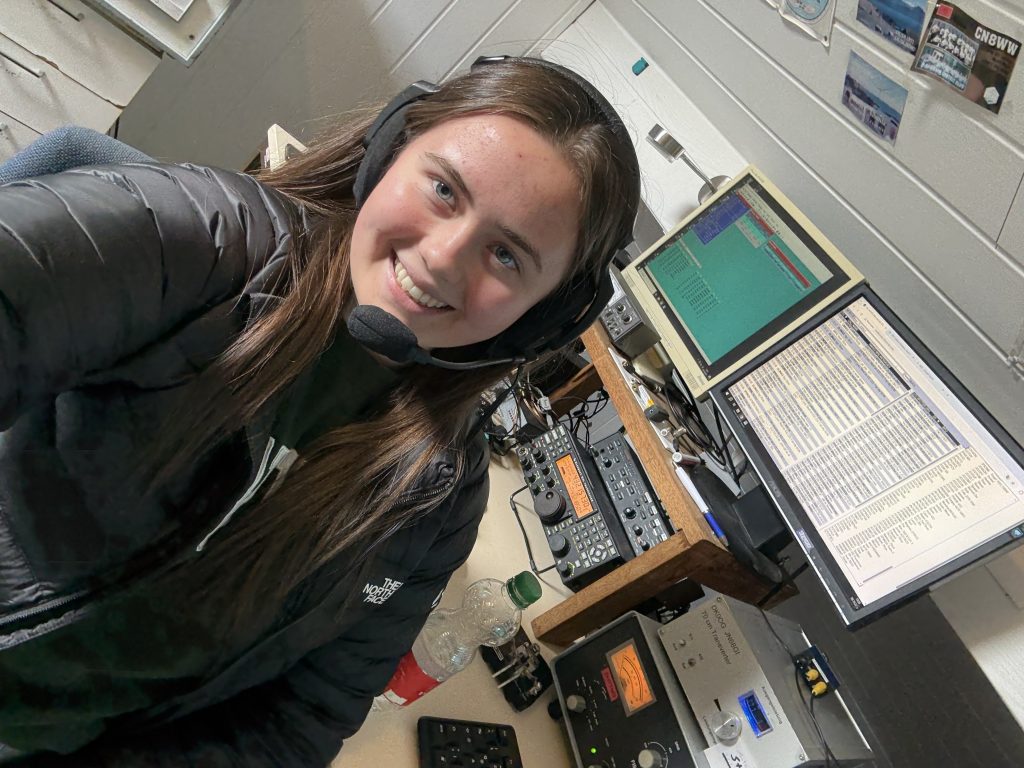
While I was excited to operate in the contest the next weekend, I was still admittedly nervous to actually contest in German. Parts of the contest felt like it did when I was getting on the air in CW before my CW skills were very solid—a little nerve wracking but still exciting.
Speaking German in a contest also adds a level of difficulty to the language that you won’t find in the classroom or even in everyday life. Contesting is fast paced, which means your brain has to work twice as hard to process everything that you hear. This can be especially challenging when learning a new language.
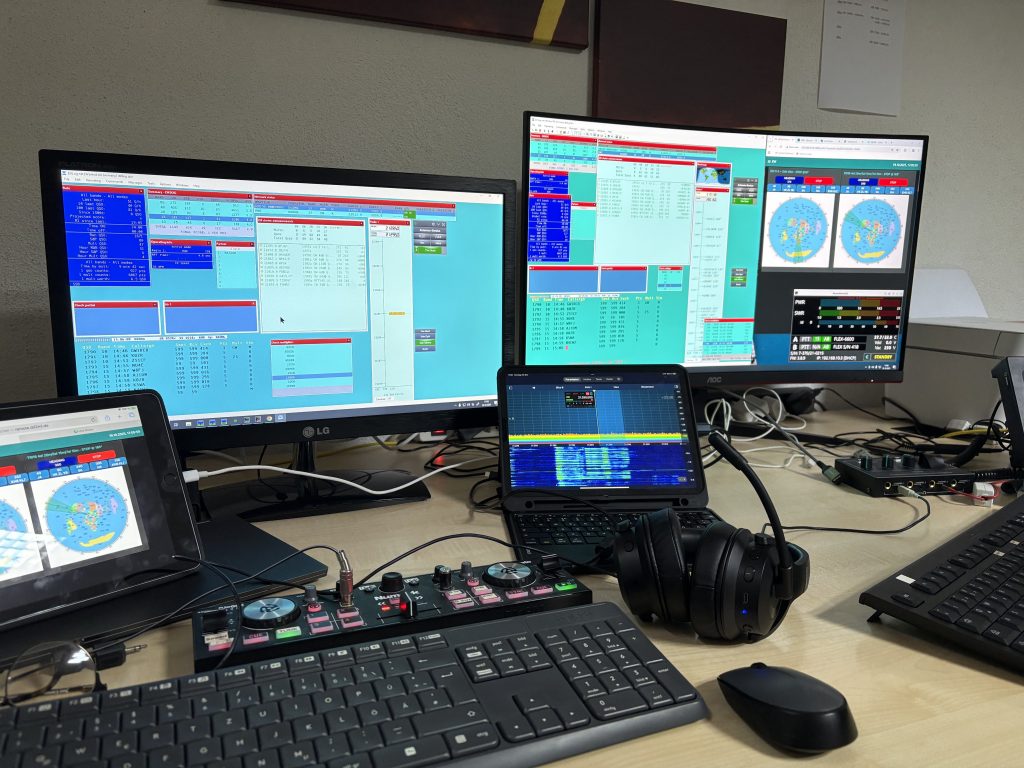
I ended up really enjoying the contest. It turned out to be a great way to practice my numbers and other amateur-radio-related vocabulary (which is, to nobody’s surprise, challenging to practice and learn outside of an amateur radio event).
Since the contest, I’ve acquired a German callsign and operated in a few more DARC contests. I’ve also improved my German quite a bit. After having about a month of intense language lessons to start the year, it felt good to get back to amateur radio. It was even more exciting to broaden my skillset to include contesting in German.

