


OnAllBands’ final QSL card post of 2025 takes us roughly 8,000 miles from DX Engineering headquarters in Tallmadge, Ohio, to Lakshadweep—an archipelago of 36 islands between the Arabian Sea and the Laccadive Sea off the Malabar Coast near Kerala, India. Its name means “one hundred thousand islands” in Malayalam.
You’ll have an excellent chance to make Lakshadweep one of your first DXCC conquests of 2026 thanks to the multi-operator, international VU7RS DXpedition from Agatti Island scheduled for Jan. 10-22. You can try to reach VU7RS on 160-6M in CW, SSB, and Digital. The DXpedition will be using the AU7RS call sign, marking the first time a VU7 call sign has been issued with the AU series, per the VU7RS website.
DX Commander is supporting VU7RS by providing several of its high-performance multiband vertical antennas. DX Engineering is the exclusive North American distributor of DX Commander antennas and accessories.
You can read more of the details and get up-to-date news about the DXpedition at the VU7RS website.
About Lakshadweep
The islands of Lakshadweep cover 12.6 square miles about 250 miles off the coast of mainland India. Its ten inhabited islands, including Agatti, have a population of around 64,000. Lakshadweep is a Union Territory of India, meaning it is governed by an appointed administrator rather than having its own government. It was known as the Laccadive, Minicoy, and Amindivi Islands (or simply “Laccadives”) until it was renamed Lakshadweep in 1973.
Its economy is dependent on fishing, tourism, and agriculture—particularly coconut products. Government-run coir (coconut fiber) factories produce fiber, yarn, and mats. Thousands of tourists visit the islands annually to enjoy scuba diving, sportfishing, and other activities.
In 2005, the world’s first low-temperature thermal desalination (LTTD) plant was opened in Kavaratti, Lakshadweep’s capital. The plant was developed by India’s National Institute of Ocean Technology to provide fresh drinking water using the temperature difference between warm surface seawater and cold deep seawater. The plant produces 100,000 liters of fresh drinking water per day. LTTD plants can also be found on Agatti and Minicoy islands.
QSL Cards
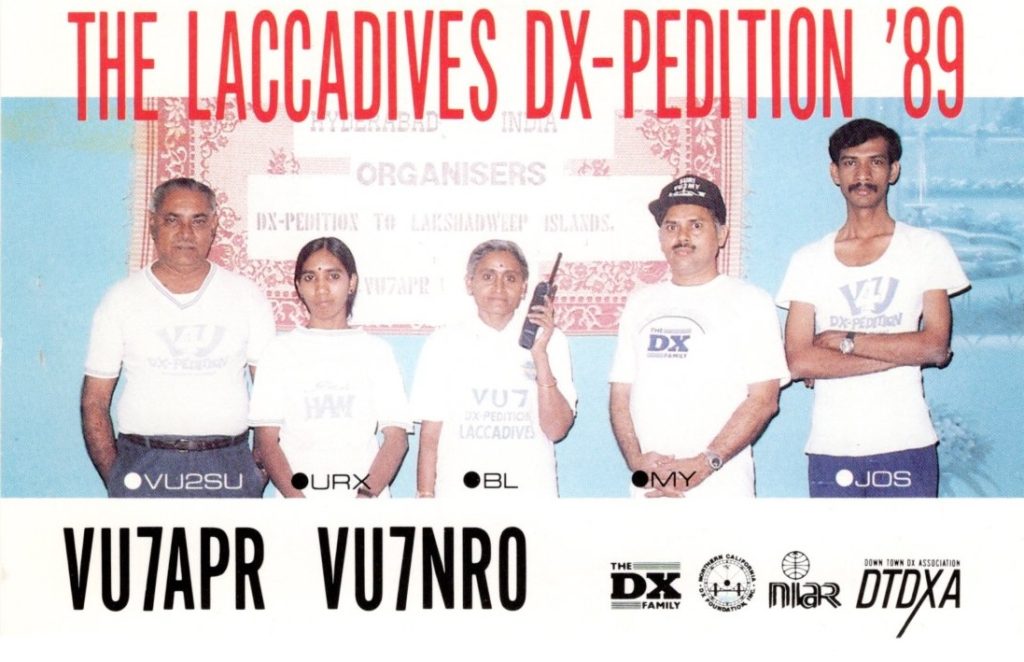
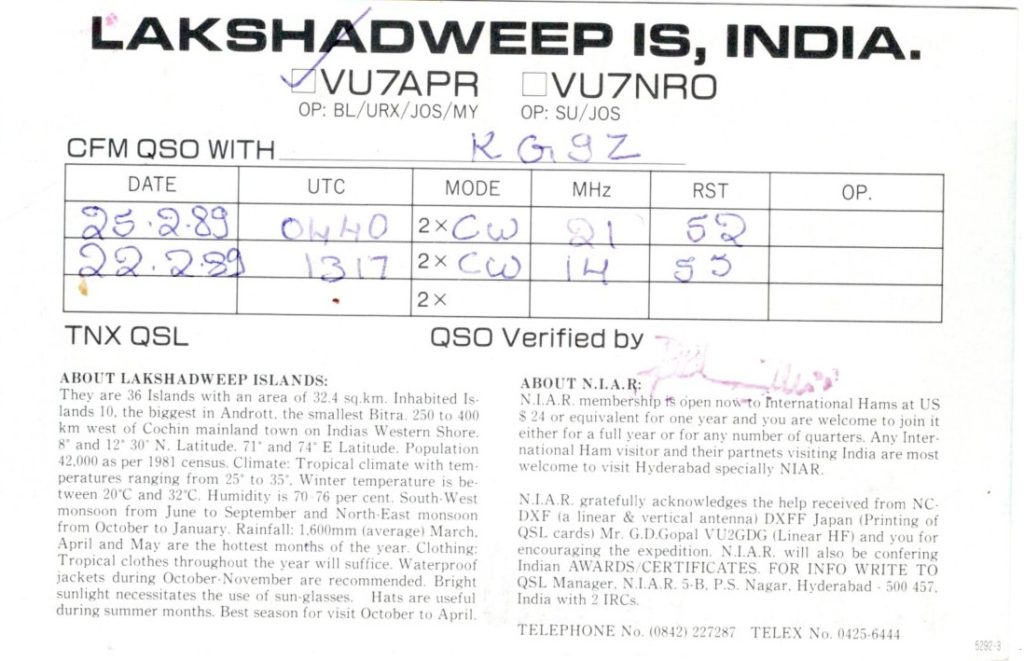
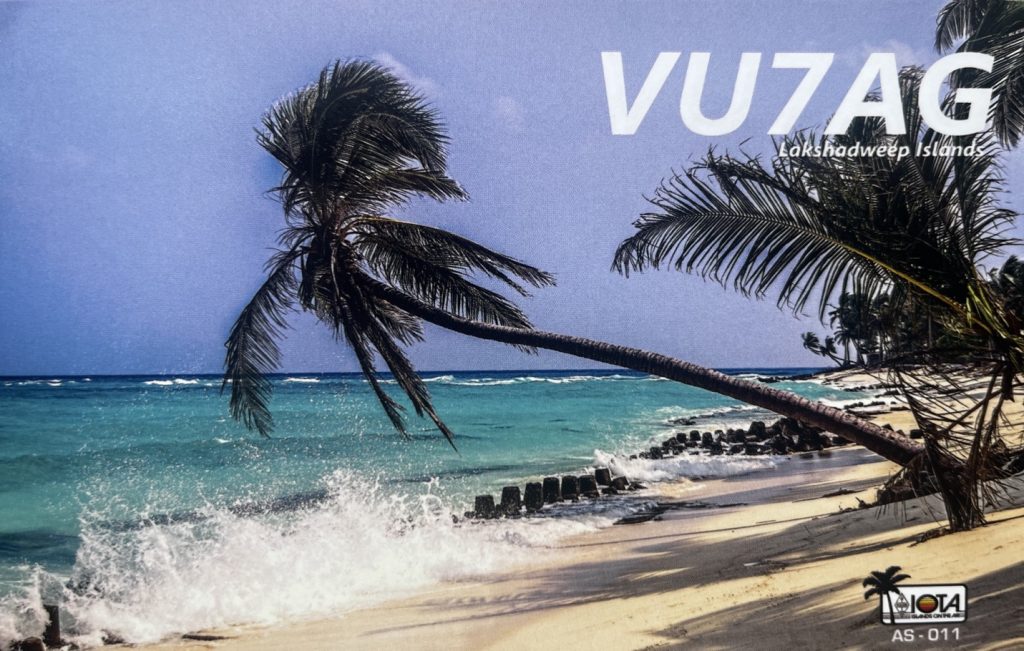
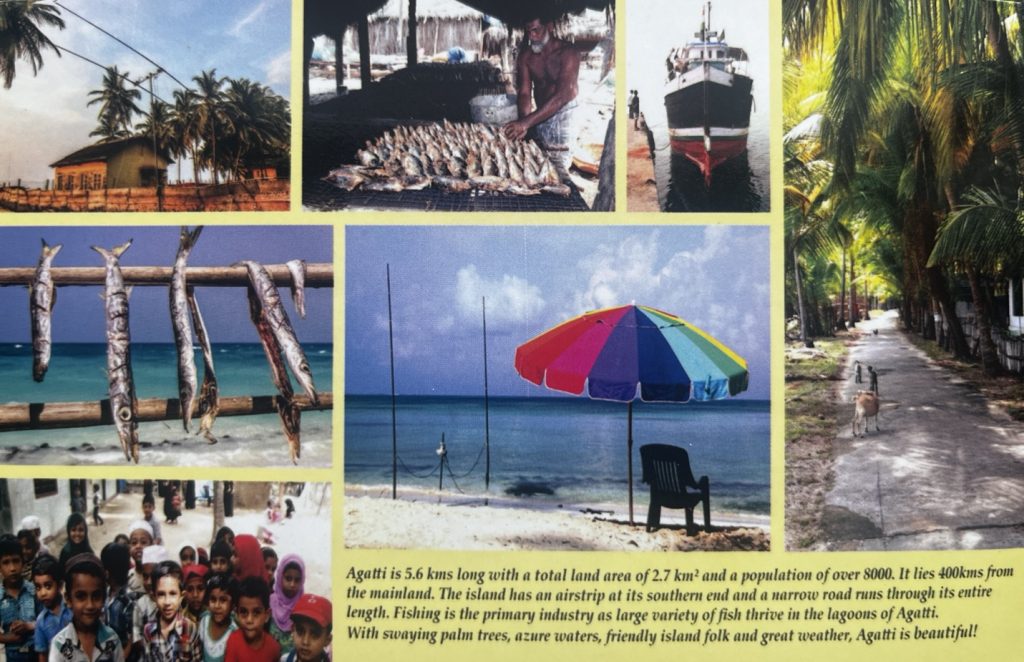
The active hams at DX Engineering have had great success contacting Lakshadweep over the years (a good reason to contact them for help with your gear if you’d like to do the same). Here are a few more of the QSL cards from their collections.
Scotty, KG9Z, DX Engineering customer/technical support specialist, made CW contacts with VU7APR in 1989.
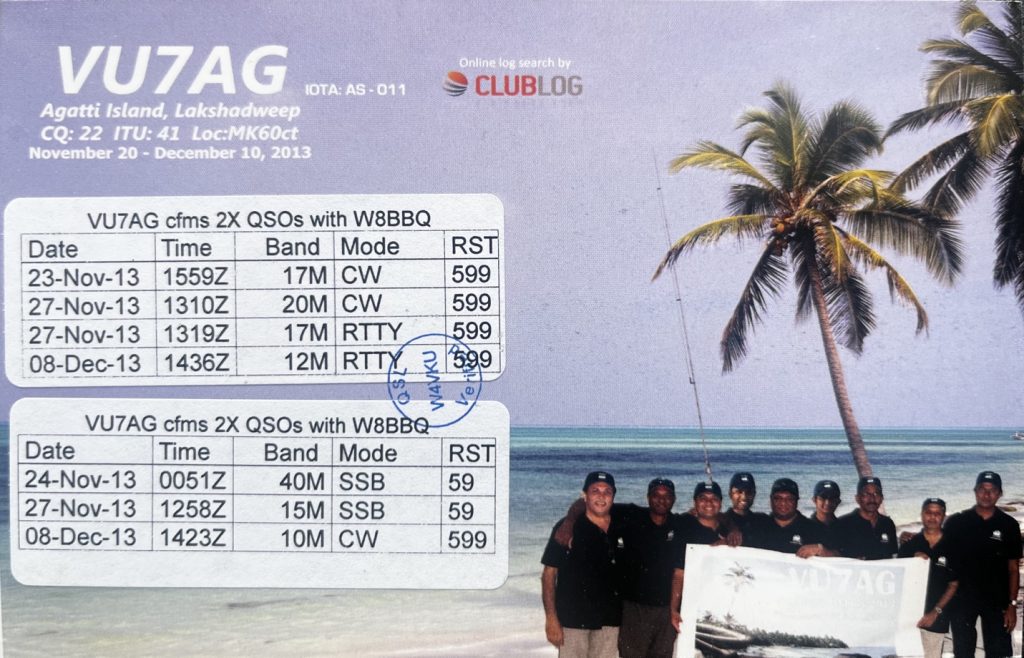
Mark, W8BBQ, DX Engineering customer/technical support specialist, made CW, SSB, and RTTY contacts with the VU7AG DXpedition operating from Agatti. The team logged 55,000 QSOs in November/December 2013.
Visit DXEngineering.com for everything you need to upgrade your station to make sure you’re ready when entities like Lakshadweep are on the air.
You’ll find transceivers, antennas, amplifiers, CW keys and paddles, headsets and speakers, reference books like “Ham Radio DX: A Complete Guide,” and much more.
Editor’s Note: Every month, DX Engineering features QSL cards from our team members’ personal collections. To highlight upcoming DXpeditions, we’ll be displaying a few of our favorite cards along with details about what it took to make these contacts. We’re excited to share some of the special cards pulled from the thousands we’ve received over the years. We look forward to seeing your cards as well!

